Why early spoken-language skills matter for learning to read
If you’re a parent of a toddler or preschooler, you’ve probably wondered which skills come first: learning letters or learning to listen and play with sounds. This post explains reading readiness milestones—what children typically know between ages 2–5 and in kindergarten—and why phonological awareness (the ability to hear and manipulate sounds) usually comes before letter knowledge. You’ll get a clear, age-by-age checklist of pre-reading skills by age, five no-prep phonological awareness activities for kids that you can start tonight, and practical signs that it’s time to seek a professional evaluation rather than wait-and-see. (Image: parent and child sharing a picture book)
How spoken language and phonological awareness set the stage for letters
Before kids can connect letters to sounds, they need to be comfortable hearing, remembering, and playing with sounds and syllables. Phonological awareness activities for kids—like rhyming, clapping syllables, and identifying initial sounds—help children notice the sound structure of words. These skills support later decoding and spelling because they let children break words into parts and map those parts to letters. In short, strong listening and sound-play skills make learning letters less frustrating and more successful. (Image: child doing syllable clap)
Reading readiness milestones: pre-reading skills by age (2–kindergarten)
Use this checklist as a general guide—children develop at different rates, but these are common targets to aim for.
Ages 2–3
– Enjoys sharing books and turning pages
– Understands simple stories and points to pictures on request
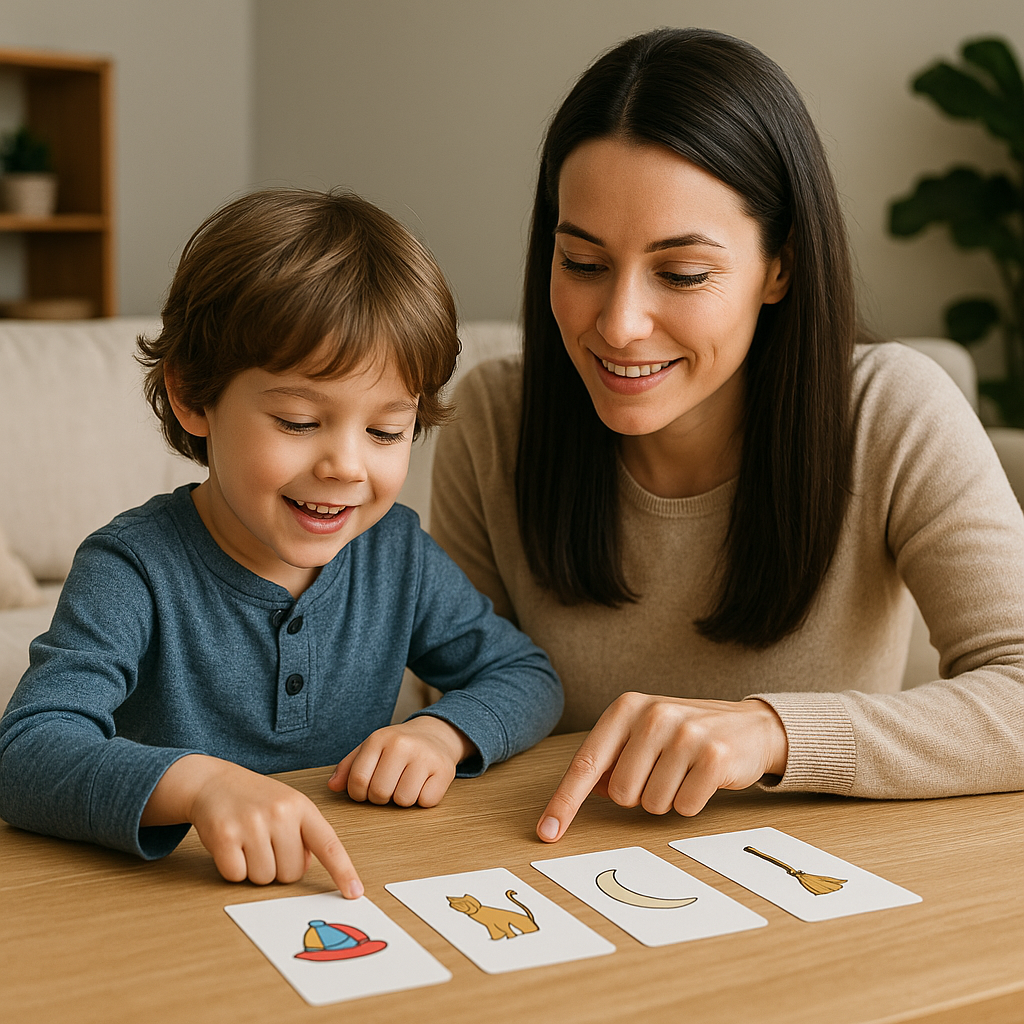
– Begins to rhyme occasionally (e.g., "cat"/"hat")
– Can clap or move to a steady beat
Ages 3–4
– Produces rhymes and recognizes when words rhyme
– Can segment simple syllables (clap the syllables in "ba-na-na")
– Identifies some initial sounds (e.g., words that start with /m/)
– Begins to recognize environmental print (logos, familiar signs)
Ages 4–5 (Pre-K)
– Manipulates sounds: blends two to three phonemes (e.g., /b/ + /a/ + /t/)
– Matches words that start with the same sound
– Demonstrates stronger vocabulary and sentence comprehension
– Shows interest in letters and may recognize several
Kindergarten
– Deliberately blends and segments sounds to read and spell simple words
– Recognizes most letter names and common letter–sound links
– Reads simple decodable books with support
If your child is not showing several skills from their age range, it can be worth using targeted activities or asking for a screening. (Image: milestone checklist printable)
Five no-prep at-home literacy games to build reading readiness
These quick, playful activities require no worksheets—just ordinary moments and a bit of imagination.
1) Rhyme Toss
How: Toss a soft ball back and forth. Each time your child catches it, say a word and take turns giving a rhyme (cat → hat). Start with obvious rhymes.
Why: Builds rhyme awareness, an early phonological skill.
2) Syllable Clap
How: Say a word (pizza, doggie) and have your child clap one clap per syllable. Make it silly and slow for younger kids.
Why: Teaches word segmentation and syllable awareness.
3) Sound-based "I Spy"
How: Play "I spy with my little eye something that starts with /s/". Use objects in the room.
Why: Strengthens initial-sound identification in a motivating way.
4) Silly Word Swap
How: Take a two-syllable word and swap one syllable with a silly one (banana → nana-bah). Encourage your child to invent swaps.
Why: Encourages phonological manipulation and creativity.
5) Sound Scavenger Hunt
How: Give your child a target sound (e.g., /b/) and find three things that start with that sound. Collect or take photos.
Why: Reinforces initial-sound matching and environmental print awareness.
Short daily play sessions—5–10 minutes—work better than long one-time drills. (Image: family playing sound scavenger hunt)
When to worry—and when to get a professional look
Most variability is normal, but some patterns suggest it’s time for an evaluation rather than waiting.
Consider scheduling a screening if your child:
– Rarely plays with rhymes or can’t blend simple sounds by kindergarten
– Struggles to follow age-appropriate spoken directions or has very limited vocabulary
– Has trouble hearing or seems not to respond consistently (rule out hearing first)
– Shows family history of dyslexia and is missing multiple pre-reading milestones
Signs of dyslexia in preschoolers may include difficulty learning nursery rhymes, trouble recognizing rhyming words, or persistent trouble with letter–sound links once exposed. If you notice these signs or if your gut says something isn’t clicking, an early professional look can save months of frustration. Early, simple supports often make a big difference. (Image: clinician doing a brief screening with child)
Small daily moments build big reading futures
Reading readiness milestones give you a roadmap, but the best progress comes from playful, consistent practice that fits your family. Focus on sound play—rhymes, claps, and quick listening games—and celebrate curiosity about books and words. If you’re unsure whether your child is on track or want targeted ideas that match your child’s interests, a free literacy screening can point you to the next right steps. Simple games today can make reading feel easier and more joyful tomorrow.
Frequently Asked Questions
My child knows some letters but doesn’t rhyme—should I worry?
Letter knowledge is great, but rhyme and other phonological awareness skills are also important. Try adding short rhyme games and syllable claps into daily routines. If your child still struggles after consistent play, consider a screening to rule out underlying issues.
How much daily time should we spend on phonological awareness activities for kids?
Short, frequent sessions—5 to 10 minutes, once or twice a day—are ideal. Make activities playful and tied to routines (car rides, bath time, snack time) so they feel natural, not like extra homework.
What are early signs of dyslexia in preschoolers and when should we act?
Early signs can include trouble recognizing rhymes, difficulty clapping syllables, and very slow letter-sound learning. If signs appear, especially with family history, schedule a professional screening rather than waiting. Early support leads to better outcomes.
Ready for a free literacy screening?
If you’d like individualized guidance, schedule a free literacy screening to see where your child’s pre-reading skills are and get simple, practical next steps tailored to your family: https://lotsofspeech.com/literacy-reading-readiness-speech-therapy/ (Image: clickable calendar to book)